
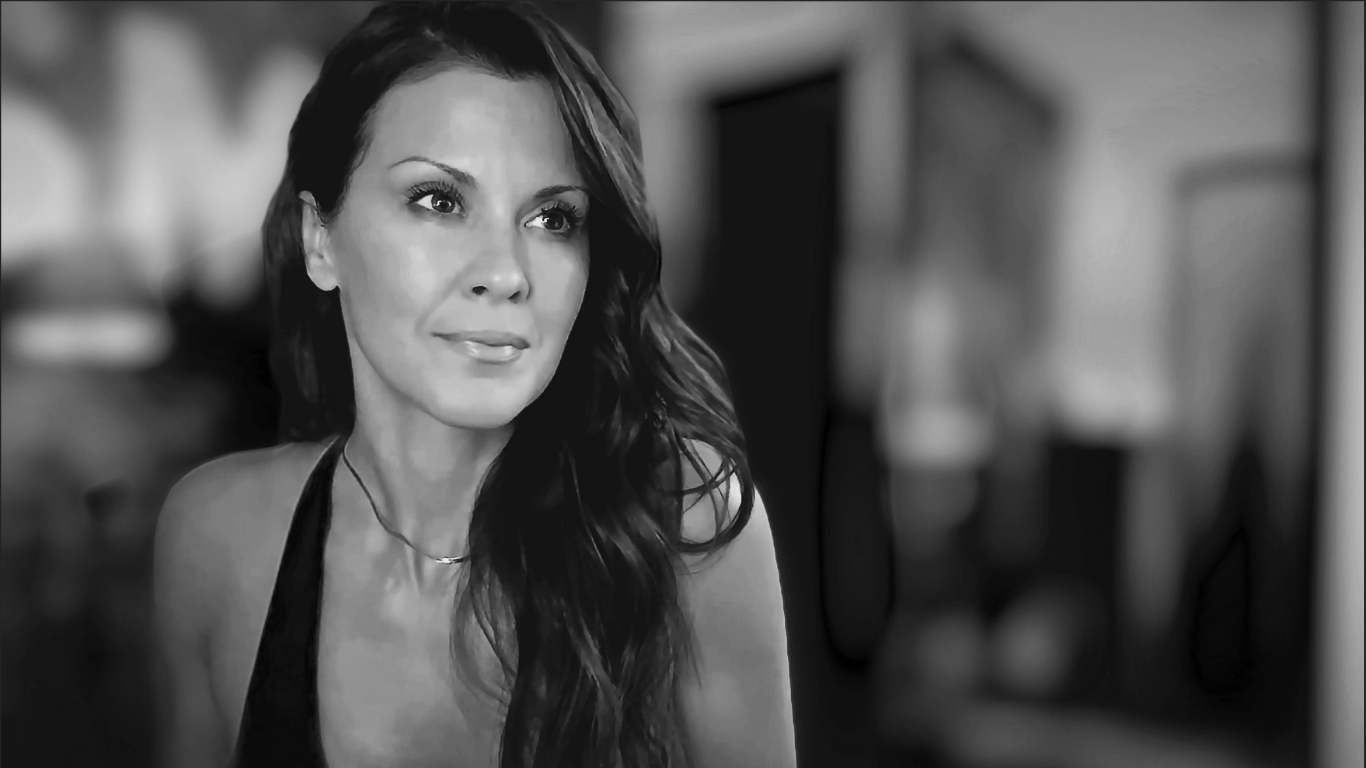
EMBODIMENT + CONSCIOUS PRACTICE GUIDE
a spiritual life must be lived
I’m Veronica Penacho.
I’m interested in the space between what we understand and how we actually live.
This work didn’t begin as a career path.
It began with my own need to understand how to live inside a life that did not always feel easy to inhabit.
For much of my life, I learned how to adapt. Be capable. Responsible. Strong. To keep going.
My body, however, kept interrupting that story.
Illness, pain, sensitivity, motherhood, relationships, separation, spiritual questioning, and periods of profound change gradually made it impossible to keep living entirely from the identities that had once helped me function.
I began asking questions I didn’t yet have language for.
Over time, many of them returned me to one…
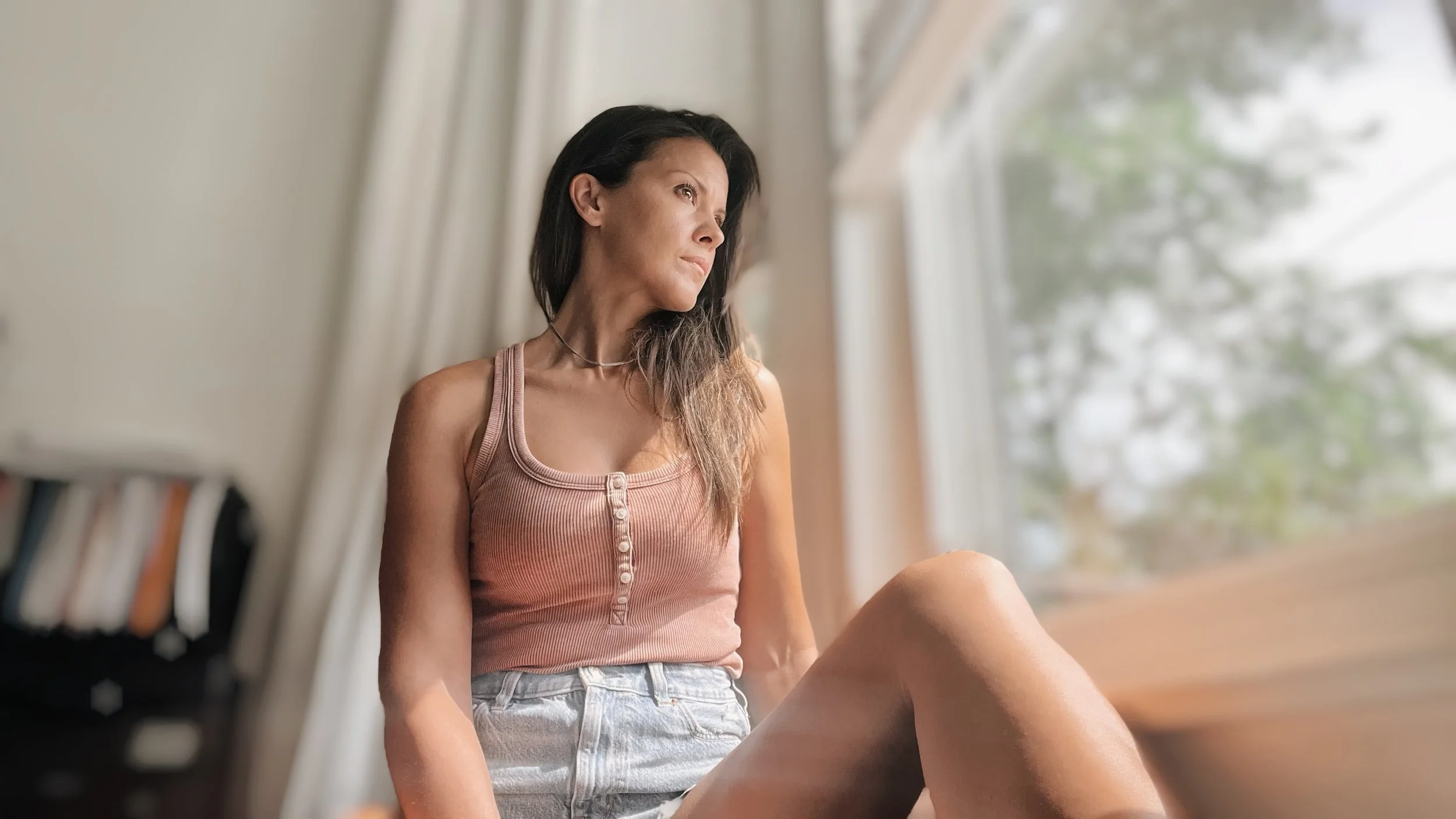
How do I actually live what I know?
That’s the space I work within now.

My Approach
My work draws from more than one way of understanding a human life.
It has been shaped by years of study and practice in yoga and yoga philosophy, meditation, breathwork, psychology, Jungian thought, shadow work, relationship and attachment patterns, spirituality, philosophy, embodiment, astrology, and conscious practice.
I am interested in how these different ways of seeing speak to one another, and how they can help us notice what we may not have been able to see from inside our own patterns.
Because life is rarely just one thing.
A relationship pattern may involve attachment, family history, desire, fear, communication, values, bodily responses, social conditioning, and the particular circumstances of the relationship itself.
A behaviour that once developed as an adaptation might also contain something genuinely supported and authentic to your soul’s expression and evolution. A difficult pattern may carry both vulnerability and capacity. And something that looks simple from the outside might have several layers underneath it.
This is also why different moments call for different tools.
My work is about learning to see more of what is actually there and becoming more conscious of how we meet it.
My Values
Truth Without Violence
Honesty matters to me. But truth doesn’t have to become another weapon we use against ourselves. I want to be able to see what is real without immediately turning what I find into something that needs to be rejected, corrected, or fixed.
Practice Over Performance
I’m less interested in how conscious, spiritual, healed, or self-aware something appears than in what it becomes when it is actually lived. How I meet myself, other people, and the life in front of me.
Relationship Over Authority
I have become increasingly wary of giving any single teacher, system, framework, or interpretation more authority than my own lived experience and discernment. I value knowledge. I value teachers. I value traditions, maps, and tools. But I want to remain in relationship with what they show me rather than surrendering my own participation to them.
Wholeness Over Reduction
I don’t want to understand myself through only one part of my story. I am not a placement or a wound. I am not a diagnosis, adaptation, relationship pattern, spiritual identity, or story about what happened to me. Any one of those things may contain important information. None of them contains the whole of me. I want to keep making room for more of the picture.
Meeting Myself Differently
At first, I thought self-discovery would give me a clearer answer to who I was.
Instead, it showed me how much of what I called “me” had been shaped through repetition.
Some of the identities I had developed helped me survive. They also shaped how I related to my body, my relationships, work, love, responsibility, and myself.
Eventually, I understood that the work wasn’t to destroy the self.
It was to become conscious of my relationship with it.
What changed wasn’t simply what I knew, but how I began meeting myself.
I became more interested in slowing down than in immediately fixing. More interested in listening than overriding. More interested in asking what an experience was revealing than deciding whether it was “good” or “bad.”
Gradually, practice became less about becoming someone better and more about learning how to remain in relationship with myself.
Especially when the experience was difficult.
Especially when I didn’t yet know what came next.

A Bit
About Me
I create, teach, guide, and continuously nerd out over whatever I’m exploring and learning.
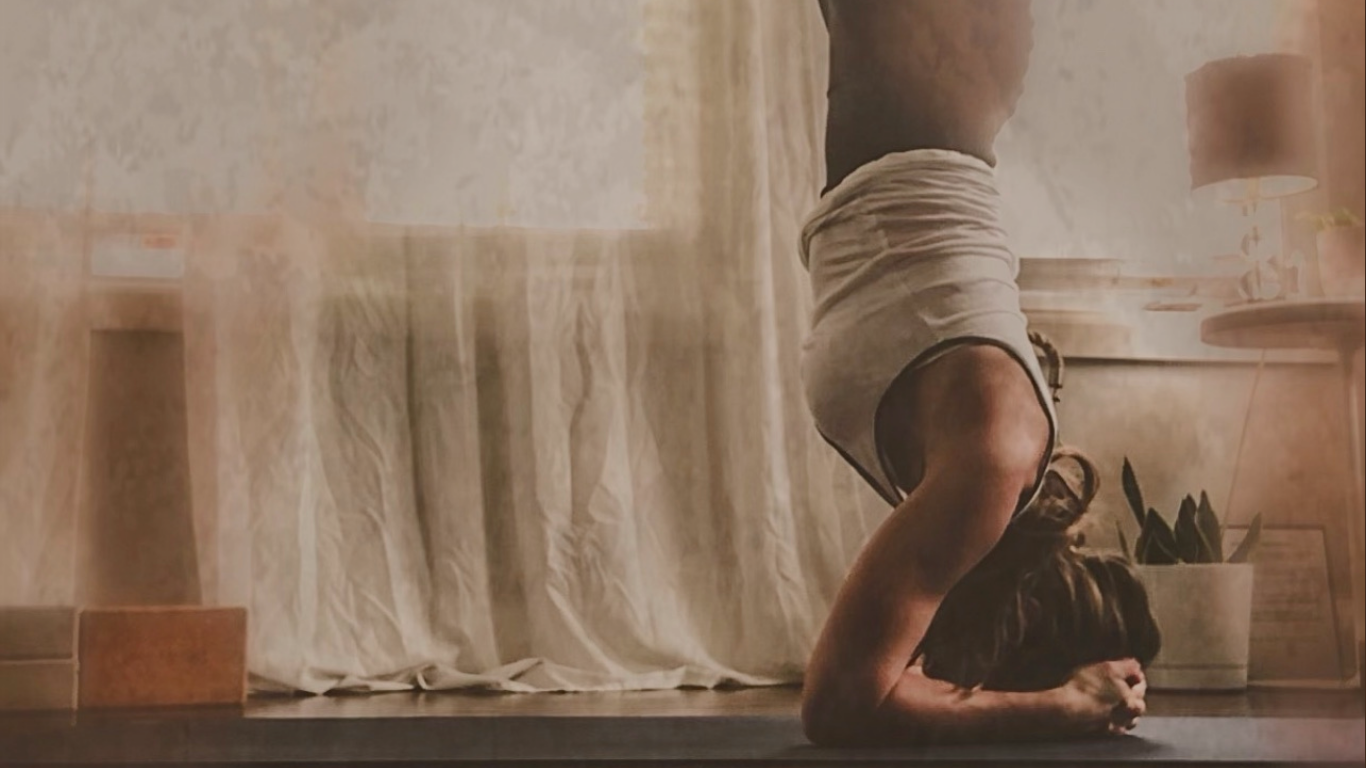
Yoga has been part of my life and practice since 2013. It’s philosophy and practices continue to shape how I understand attention, embodiment, energy, and conscious participation.
I began studying astrology more than 25 years ago. What continues to fascinate me is not only the symbolic language, but the mystery of how a chart can correspond so meaningfully with a lived life.
I’m endlessly interested in language: where words come from, what they teach us to perceive, and what happens when we begin questioning meanings we have inherited. Writing and speaking are both part of how I think. Sometimes I don’t know what I understand until I give it language.
Creativity is another way I return to myself. Music (through guitar, piano, and voice) has accompanied me through some of the most transformative periods of my life and remains one way I express what words cannot always hold.
I care deeply about beauty, silence, nature, thoughtful conversation, intimate relationships, play, humor, and creating spaces where people don’t have to perform themselves.
I love comforting food, morning coffee, and a home that feels warm, clean, and lived in.
Dog mama. Boy mama.
And I still practice what I teach.
You don’t need another version of yourself.
Maybe you need time. Space. A different question. A way of seeing the pattern you have been living from inside. Or simply enough room to hear yourself differently.